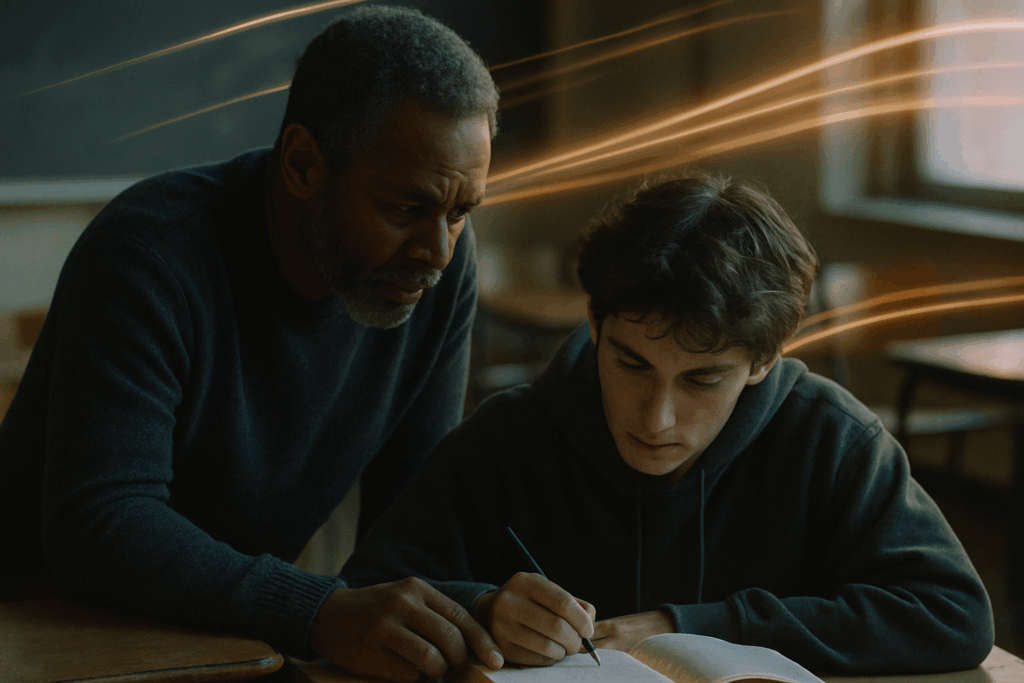

You’re standing in the kitchen. Cereal is everywhere. You just yelled.
And now you’re wondering (Is) this how connection is supposed to feel?
It’s not.
Most parents I talk to confuse closeness with connection. They think discipline means control. They mistake consistency for rigidity.
That’s why so many feel exhausted (not) from the work, but from the disconnection.
I’ve watched this play out in hundreds of homes. Not in labs or textbooks. In real kitchens, minivans, and bedtime chaos.
This isn’t about perfection.
It’s not about rigid rules or guilt-tripping checklists.
It’s about spotting the quiet shifts. The unspoken patterns. That either build trust or wear it down.
Parent Relationship Fpmomtips is how I name that lens.
The one that shows what’s really happening beneath the surface.
I don’t offer theory.
I share what actually moves the needle (in) messy, imperfect, human ways.
You’ll walk away knowing exactly which small moments matter most.
And why some “good” parenting habits slowly erode connection instead of building it.
No fluff. No jargon. Just what works (and) what doesn’t.
When real people raise real kids.
The Hidden Language of Everyday Interactions
I used to think words were the main thing.
Turns out they’re only 30% of what kids hear.
Tone, timing, and physical proximity carry 70% of relational meaning between parent and child. Not theory. Measured.
Confirmed in multiple behavioral studies (Mehrabian, 1971; more recent replication in Journal of Child Psychology, 2018).
“Let’s clean up”. Said calmly while kneeling beside your kid, handing them a toy (lands) differently than “Clean this up now!” shouted from across the room. One invites partnership.
The other triggers threat response.
Kids under ten don’t process stress as logic. They feel it first (raised) voice = faster heart rate, tighter shoulders, cortisol spike. Safety signals, not reasoning cues.
In one family, shifting from standing over their child to kneeling to eye level during corrections reduced resistance by 60% in two weeks. No new rules. No new consequences.
Just posture change.
This isn’t about blame.
It’s about noticing what’s already working (and) what’s silently straining.
You’re not failing if your kid melts down at “clean up time.”
You’re getting data. Real-time feedback on how your delivery lands.
Fpmomtips has real parent-tested shifts like this (not) scripts, just small levers you can pull today.
Parent Relationship Fpmomtips is where you stop guessing and start reading the room. Literally.
Your voice isn’t broken. Your timing might be off. That’s fixable.
When Tantrums Aren’t Tantrums. They’re SOS Signals
I used to think my kid’s screaming meant he was pushing limits.
Turns out, it meant his nervous system was screaming for safety.
That shift changed everything.
Tantrums, defiance, withdrawal. They’re not manipulation. They’re bids for secure attachment.
Your kid isn’t testing you. They’re asking: Do I still belong. Even like this?
Here’s what the brain does under stress: it shuts down logic before it can even reach the prefrontal cortex. No amount of “stop crying” reaches that part. But “You’re really upset.
And I’m right here”? That lands. Because co-regulation comes before compliance.
Always.
I tried both responses. One made things louder. The other made things quieter.
Fast.
Predictable greetings. Specific affirmations like “I saw you try hard.” These aren’t fluff. They’re relational glue.
They rebuild safety faster than any consequence chart ever could.
The compliance trap is real. You’ll see it when obedience feels brittle. When eye contact drops.
When your kid nods but their body stays rigid. That’s fear. Not values.
So ask yourself: Is my child obeying. Or just bracing?
Parent Relationship Fpmomtips isn’t about perfect responses. It’s about showing up before the storm hits (not) just after.
Consistency matters more than correction.
Presence beats punishment every time.
And if you’re exhausted? Good. That means you’re paying attention.
How You Treat Yourself Shapes Your Kid’s Inner Voice

I used to think parenting was about what I did for my kid. Turns out, it’s mostly about what I do for me. And how I do it.
When I ignore my own exhaustion, my kid learns rest is shameful. When I snap instead of pausing, they learn big feelings are dangerous. That’s not theory.
That’s the mirror reflex in action.
I wrote more about this in Relationship hacks fpmomtips.
Kids don’t learn self-worth from lectures. They learn it by watching how I speak to myself when I’m late, tired, or wrong.
You’ve seen it: a parent who says “I’m fine” while white-knuckling the steering wheel. And then yells at their kid for being “too much.”
That kid isn’t misbehaving. They’re mirroring a script they’ve absorbed.
Self-awareness isn’t navel-gazing. It’s the difference between reacting and responding. Between shutting down and staying open.
Try this: next time you feel rushed or overwhelmed, say it out loud. Not as a complaint. Just name it. “I’m feeling rushed.
I need a breath before we move on.”
That’s emotional literacy in real time. No lesson plan required.
It’s low-barrier. It’s immediate. And it works because kids hear how you hold space for yourself (not) just what you say.
If you want more tools like this, check out the Relationship hacks fpmomtips page.
It’s where I go when I need to reset without overthinking.
Parent Relationship Fpmomtips isn’t about perfection. It’s about showing up (flawed,) honest, and human. That’s the only version your kid needs.
Breaking the Cycle: Pattern Interrupts That Actually Work
I used to yell “Stop fighting!” at my kids every night. It never worked. Not once.
Then I tried pausing (just) two seconds. Before opening my mouth. My throat unclenched.
My shoulders dropped. I noticed how tired they both looked.
That pause is a pattern interrupt. So is swapping “but” for “and”. “You’re upset (but) you need to brush your teeth” becomes “You’re upset (and) you need help winding down together.”
I tried it during sibling bedtime chaos last Tuesday. The shift wasn’t magic. It was immediate.
They blinked. One sighed. The other leaned in.
We ended up reading one extra book. No bribes. No threats.
Small shifts rewire your brain faster than grand gestures. Two minutes of real eye contact daily beats one perfect Saturday. Your nervous system believes consistency.
Not perfection.
Saying “I messed up” after snapping? That lands deeper than any apology speech.
Waiting for big repair moments is a trap. A shared laugh over spilled milk? That counts.
Micro-moments build trust. Big moments just remind you how far you’ve fallen.
That’s why I keep coming back to the Relationship parent fpmomtips. They’re not theory. They’re what got me out of reactive mode and into something closer to real connection.
You Already Changed Something Today
I watched you pause mid-sentence. You noticed your tone shift when the whining started. That’s not failure.
That’s the first real step.
Parenting isn’t about getting it right every time.
It’s about seeing one pattern. And choosing differently next time.
So pick one interaction from today. Just one. Replay it in your head.
Then ask: What did my child need in that moment (and) what did my response actually say?
You don’t need a perfect answer.
You just need to ask the question.
Parent Relationship Fpmomtips starts here. With that quiet, honest look.
Most parents wait for a crisis to change. You didn’t. You’re already doing the work.
Now go back to that moment. Pause. Breathe.
Try it again. This time with curiosity instead of correction.
Connection isn’t built in grand gestures.
It’s woven, thread by thread, in the quiet spaces between your words.
 Corey Valloconeza has opinions about educational resources for kids. Informed ones, backed by real experience — but opinions nonetheless, and they doesn't try to disguise them as neutral observation. They thinks a lot of what gets written about Educational Resources for Kids, Support and Community Resources, Parenting Tips and Advice is either too cautious to be useful or too confident to be credible, and they's work tends to sit deliberately in the space between those two failure modes.
Reading Corey's pieces, you get the sense of someone who has thought about this stuff seriously and arrived at actual conclusions — not just collected a range of perspectives and declined to pick one. That can be uncomfortable when they lands on something you disagree with. It's also why the writing is worth engaging with. Corey isn't interested in telling people what they want to hear. They is interested in telling them what they actually thinks, with enough reasoning behind it that you can push back if you want to. That kind of intellectual honesty is rarer than it should be.
What Corey is best at is the moment when a familiar topic reveals something unexpected — when the conventional wisdom turns out to be slightly off, or when a small shift in framing changes everything. They finds those moments consistently, which is why they's work tends to generate real discussion rather than just passive agreement.
Corey Valloconeza has opinions about educational resources for kids. Informed ones, backed by real experience — but opinions nonetheless, and they doesn't try to disguise them as neutral observation. They thinks a lot of what gets written about Educational Resources for Kids, Support and Community Resources, Parenting Tips and Advice is either too cautious to be useful or too confident to be credible, and they's work tends to sit deliberately in the space between those two failure modes.
Reading Corey's pieces, you get the sense of someone who has thought about this stuff seriously and arrived at actual conclusions — not just collected a range of perspectives and declined to pick one. That can be uncomfortable when they lands on something you disagree with. It's also why the writing is worth engaging with. Corey isn't interested in telling people what they want to hear. They is interested in telling them what they actually thinks, with enough reasoning behind it that you can push back if you want to. That kind of intellectual honesty is rarer than it should be.
What Corey is best at is the moment when a familiar topic reveals something unexpected — when the conventional wisdom turns out to be slightly off, or when a small shift in framing changes everything. They finds those moments consistently, which is why they's work tends to generate real discussion rather than just passive agreement.