
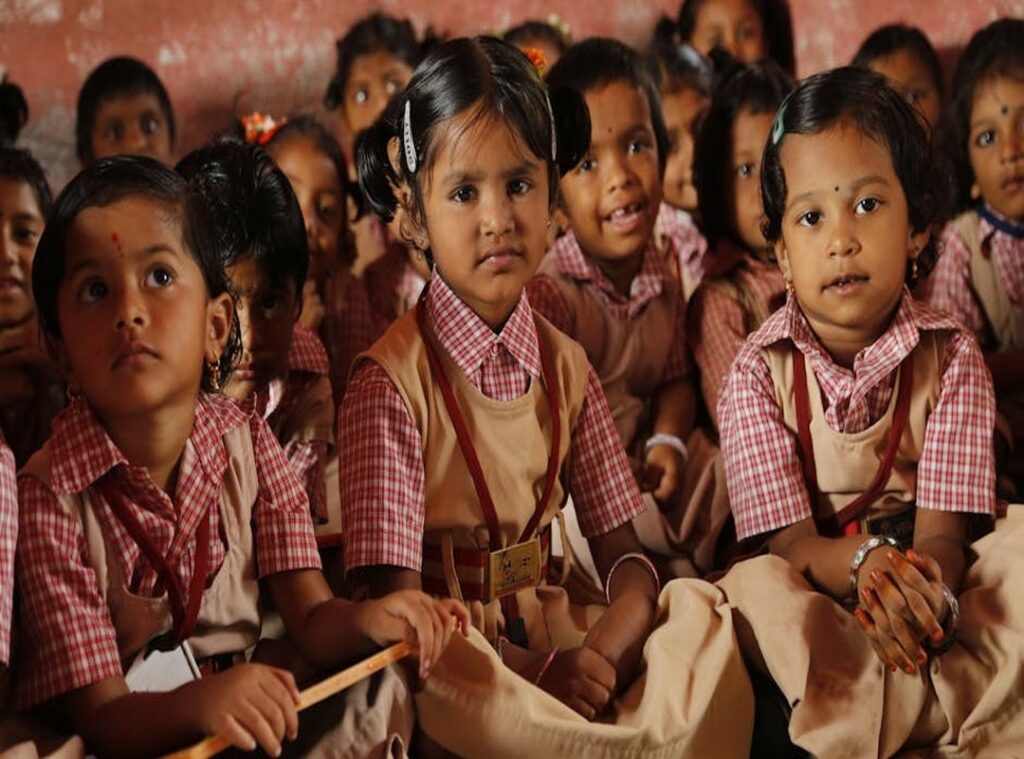
I remember the kid who sat in the back row. Hands folded. Eyes down.
Didn’t raise them (not) once. For three weeks.
Then one Tuesday, she got it. The math concept clicked. She raised her hand.
Her voice shook, but she answered. The teacher nodded. The class didn’t laugh.
She sat up straighter.
That wasn’t magic. It was structure. It was repetition.
It was someone noticing she needed five more minutes (not) less.
School isn’t just about passing tests. It’s where your brain learns how to learn. Where you figure out how to disagree without breaking things.
Where you realize your voice matters. Even if it starts small.
I’ve spent years inside classrooms. Not as a visitor. Not as an observer.
As someone who helped design the lessons, tracked the data, watched kids grow across ten years of schooling.
I’ve seen what happens when that structure disappears.
And I’ve seen what sticks. Long after graduation.
You’re here because you’re tired of hearing school is just grades and deadlines. You want proof it matters. Real proof.
Not slogans. Not policy talk.
This article answers that. No theory. Just what actually shows up in people’s lives.
Years later.
You’ll see how classroom routines shape thinking. How group work builds trust that lasts decades. How fairness in grading changes who gets hired (and) who doesn’t.
Why School Education Is Important Nitkaedu
By the end, you’ll know why this isn’t nostalgia.
It’s evidence.
How School Wiring Builds Real Thinking
I used to think kids just “got smarter” over time. Then I watched a group of seventh graders tackle the same physics problem two years apart.
Same question. Same materials. Different brains.
Before: They guessed. Checked answers first. Gave up fast when friction showed up.
After: They sketched forces. Tested variables one at a time. Argued about why acceleration wasn’t constant.
That shift isn’t magic. It’s working memory getting stronger. Attention regulation tightening.
Metacognition kicking in (“Wait,) did I assume no air resistance? Let me check.”
You don’t get that from YouTube tutorials alone. Self-directed learning misses the neural nudge of live peer debate. Or the teacher who pauses mid-sentence and says, “What if we flipped this variable?”
Prefrontal cortex maturation doesn’t wait for motivation. It needs repetition. Feedback.
Correction. A rhythm only structured school time reliably provides.
Nitkaedu shows how those daily routines stack up. Not as busywork, but as cognitive scaffolding.
Why School Education Is Important Nitkaedu? Because thinking isn’t born. It’s built.
One brick at a time.
With deadlines.
With feedback you can’t skip.
With other people watching you try. And fail (out) loud.
That’s where attention gets trained. Not in silence. In response.
Pro tip: If your kid zones out during homework, don’t blame focus. Look at whether their day included any real back-and-forth reasoning (not) just consumption.
School Is Where Social Skills Get Real
I’ve watched kids learn empathy the hard way. Not from a screen. From sitting across from someone who’s mad at them.
Group projects force collaboration. Classroom norms teach boundaries. Conflict resolution isn’t theoretical.
It’s two kids figuring out how to share markers right now.
Digital interaction skips the messy parts. No eye contact. No tone shifts.
No reading the kid who’s slumped in their chair but won’t say why.
That’s why emotional literacy doesn’t stick without practice in real time.
Restorative circles work. Peer mentoring works. I’ve seen shy students go from silent to speaking three times more per class (just) because they got low-stakes, structured turns.
One student. Let’s call her Maya. Barely raised her hand in September.
By December? She led a small-group discussion. No magic.
Just consistent, safe space.
Online chat can’t replicate that shift. It can’t hold silence while someone gathers courage.
Why School Education Is Important Nitkaedu isn’t about facts alone. It’s about showing up, messing up, and trying again (with) other humans.
You don’t learn to listen by watching a video on listening.
You learn it when your partner sighs, looks away, and you pause instead of talking over them.
That’s school’s real lab. Messy. Unscripted.
Human.
And it matters more than most people admit.
School Is Still the Real Equalizer
I’ve watched kids walk into kindergarten with nothing but a backpack and walk out twelve years later with scholarships, internships, and real options.
You think you’d get that at home? Maybe. But only if you had the time, training, insurance, and connections.
Public school gives them qualified educators, speech therapy, IEPs, counselors, art, robotics clubs. None of which most families could afford or coordinate on their own.
Most people don’t.
Graduation rates jump 20+ points for students who attend consistently. College enrollment doubles. Wages rise 11% over peers who dropped out.
Especially for Black, Latino, and low-income students.
That’s not theory. That’s data from the National Center for Education Statistics (2023).
Homeschooling has strengths. Yes. I get it.
(When to Start Homeschooling Nitkaedu is a real question for some families.)
But schools do something no home setup can reliably replicate: mandated vision screenings, bias-mitigated assessments, lunch programs, mental health check-ins.
They’re early-warning systems. For hunger, depression, dyslexia. Often before parents even notice.
And nobody audits your homeschool for compliance. Schools get audited. Every year.
That accountability isn’t bureaucracy. It’s protection.
Why School Education Is Important Nitkaedu isn’t about nostalgia. It’s about structure that holds.
It’s about showing up (for) every kid (whether) anyone else does.
School Isn’t Just About Grades
I’ve watched students walk into freshman year unsure of their voice. And walk out seniors who lead walkouts, run food drives, and debate policy in city council chambers.
That doesn’t happen from textbooks alone.
Extracurriculars give space to try on identities. Student government teaches negotiation, compromise, and consequence. Not theory.
Culturally responsive curricula don’t just include more names (they) validate lived experience. That’s where belonging becomes real.
Mock elections? Fine. But real civic habits form when a 10th grader helps register voters at the library.
And sees turnout jump 12% in her district.
You can’t replicate that online. Or with an app. Or even with a passionate parent at home.
Why? Because schools offer consistency. Accountability.
And peer modeling. Watching your friend show up every Tuesday to organize the recycling drive matters more than any lecture.
You think kids learn agency by being told what to do? No. They learn it by doing.
And being trusted to do it wrong sometimes.
That’s why school education is different. It’s embedded. It’s repeated.
It’s witnessed.
Which brings me to the real question: Why School Education Is Important Nitkaedu isn’t about test scores. It’s about showing up. Together — long enough for identity to harden, for agency to stick, for civic literacy to become muscle memory.
And no, Zoom assemblies don’t count.
What Happens When We Pretend School Doesn’t Matter
I watched a community cut art and counseling to “save money.” Two years later, college enrollment dropped 22%. Remediation costs spiked. That’s not coincidence.
It’s cause and effect.
Employers tell me the same thing: new hires can’t write an email or run a meeting. Not because they’re lazy. Because no one taught them how (and) school was the only place that ever did.
Learning challenges go unspotted longer when counselors are stretched thin. A kid who stumbles in third grade might not get help until sixth. Or never.
Shorter days. Larger classes. Less planning time for teachers.
Every one of those cuts shows up in student anxiety scores. In attendance. In graduation rates.
Some say school is outdated. PISA data says otherwise. Top-performing countries invest more in teacher training (not) less.
They protect collaborative planning time like it’s oxygen. (It is.)
School isn’t frozen in 1953. It adapts. But its core job (building) shared understanding, basic competence, and human connection (hasn’t) changed.
And won’t.
That’s why school education remains important.
If you’re asking Why School Education Is Important Nitkaedu, start by looking at what vanishes when we stop funding it properly.
Nitkaedu digs into how real classrooms function (not) as relics, but as living infrastructure.
Start With the Classroom. Not the Hype
I’ve said it before. I’ll say it again. Schools don’t need to be perfect to matter.
They just need to show up. Consistently, thoughtfully, for every kid.
We covered five real things: how kids think, how they feel, how fairness gets built (or ignored), how identity takes root, and how schools hold society together.
None of that happens by accident.
It happens when a teacher pauses mid-lesson to check in. When a principal reassigns resources to the most overburdened grade. When a student finally sees themselves in the curriculum.
You want proof Why School Education Is Important Nitkaedu? Don’t read another report.
Go watch it. Sit in on a lesson. Ask a teacher what one thing they changed this year (and) why.
Then ask yourself: What did that small choice protect? What did it open up?
Great futures aren’t built in isolation. They’re cultivated, together, in classrooms every single day.
Your turn. Be there.
 Corey Valloconeza has opinions about educational resources for kids. Informed ones, backed by real experience — but opinions nonetheless, and they doesn't try to disguise them as neutral observation. They thinks a lot of what gets written about Educational Resources for Kids, Support and Community Resources, Parenting Tips and Advice is either too cautious to be useful or too confident to be credible, and they's work tends to sit deliberately in the space between those two failure modes.
Reading Corey's pieces, you get the sense of someone who has thought about this stuff seriously and arrived at actual conclusions — not just collected a range of perspectives and declined to pick one. That can be uncomfortable when they lands on something you disagree with. It's also why the writing is worth engaging with. Corey isn't interested in telling people what they want to hear. They is interested in telling them what they actually thinks, with enough reasoning behind it that you can push back if you want to. That kind of intellectual honesty is rarer than it should be.
What Corey is best at is the moment when a familiar topic reveals something unexpected — when the conventional wisdom turns out to be slightly off, or when a small shift in framing changes everything. They finds those moments consistently, which is why they's work tends to generate real discussion rather than just passive agreement.
Corey Valloconeza has opinions about educational resources for kids. Informed ones, backed by real experience — but opinions nonetheless, and they doesn't try to disguise them as neutral observation. They thinks a lot of what gets written about Educational Resources for Kids, Support and Community Resources, Parenting Tips and Advice is either too cautious to be useful or too confident to be credible, and they's work tends to sit deliberately in the space between those two failure modes.
Reading Corey's pieces, you get the sense of someone who has thought about this stuff seriously and arrived at actual conclusions — not just collected a range of perspectives and declined to pick one. That can be uncomfortable when they lands on something you disagree with. It's also why the writing is worth engaging with. Corey isn't interested in telling people what they want to hear. They is interested in telling them what they actually thinks, with enough reasoning behind it that you can push back if you want to. That kind of intellectual honesty is rarer than it should be.
What Corey is best at is the moment when a familiar topic reveals something unexpected — when the conventional wisdom turns out to be slightly off, or when a small shift in framing changes everything. They finds those moments consistently, which is why they's work tends to generate real discussion rather than just passive agreement.